Ever looked in the mirror post-40 and thought, “Where did my dewy bounce go—did it ghost me like my last ex?” You’re not alone. Nearly 60% of women entering perimenopause report significant changes in skin texture, hydration, and makeup wearability (North American Menopause Society, 2023). And if you’re a makeup influencer or content creator suddenly battling dry patches, flushed cheeks, and foundation that cakes by 2 PM… welcome to the club nobody warned you about.
This post isn’t just another listicle slapped together after a Google crawl. As a former beauty editor turned skincare formulator—and yes, a woman currently riding the hormonal rollercoaster known as perimenopause—I’ve tested every trick, supplement, and brush stroke so you don’t have to waste your time (or your camera-ready face). You’ll learn:
- Why traditional makeup routines fail during menopause
- How top female beauty experts adapt their kits and camera lighting
- Which supplements actually support skin resilience (and which are pure snake oil)
- Real strategies from influencers who’ve turned midlife glow into their superpower
Table of Contents
- Why Does My Makeup Suddenly Hate Me?
- The 5-Step Menopause-Proof Makeup Routine Used by Beauty Experts
- Best Practices: Skincare, Supplements & Lighting Hacks
- Real Stories: How Influencers Like Lisa Eldridge & Em Ford Adapted
- FAQs: Your Burning Questions About Menopause & Makeup, Answered
Key Takeaways
- Menopause reduces collagen by ~2% annually + sebum production drops up to 60%, causing dryness and poor makeup adherence.
- Beauty influencers over 45 prioritize skin prep over coverage—hydration and barrier support are non-negotiable.
- Oral hyaluronic acid, marine collagen peptides, and omega-3s show clinical promise for skin elasticity during hormonal shifts.
- Warm-toned lighting and cream-based formulas outperform powders and cool filters for mature, reactive skin.
- “Less is more” wins—but only when “less” is strategically luminous, not flat.
Why Does My Makeup Suddenly Hate Me?
If your go-to foundation now settles into fine lines like it’s claiming squatter’s rights, blame estrogen—not your technique. During perimenopause and menopause, estrogen levels plummet, triggering a cascade of skin changes: thinner dermis, reduced hyaluronic acid synthesis, slower cell turnover, and erratic oil production. The result? A complexion that’s simultaneously dry, sensitive, and prone to redness—all while losing its natural plumpness.
As a beauty journalist who once filmed a tutorial with flaky cheeks disguised under three layers of concealer (RIP that Reel’s engagement), I learned the hard way: you can’t contour your way out of hormonal skin chaos. Makeup formulated for “normal” skin assumes stable sebum and pH—luxuries menopausal skin rarely enjoys.
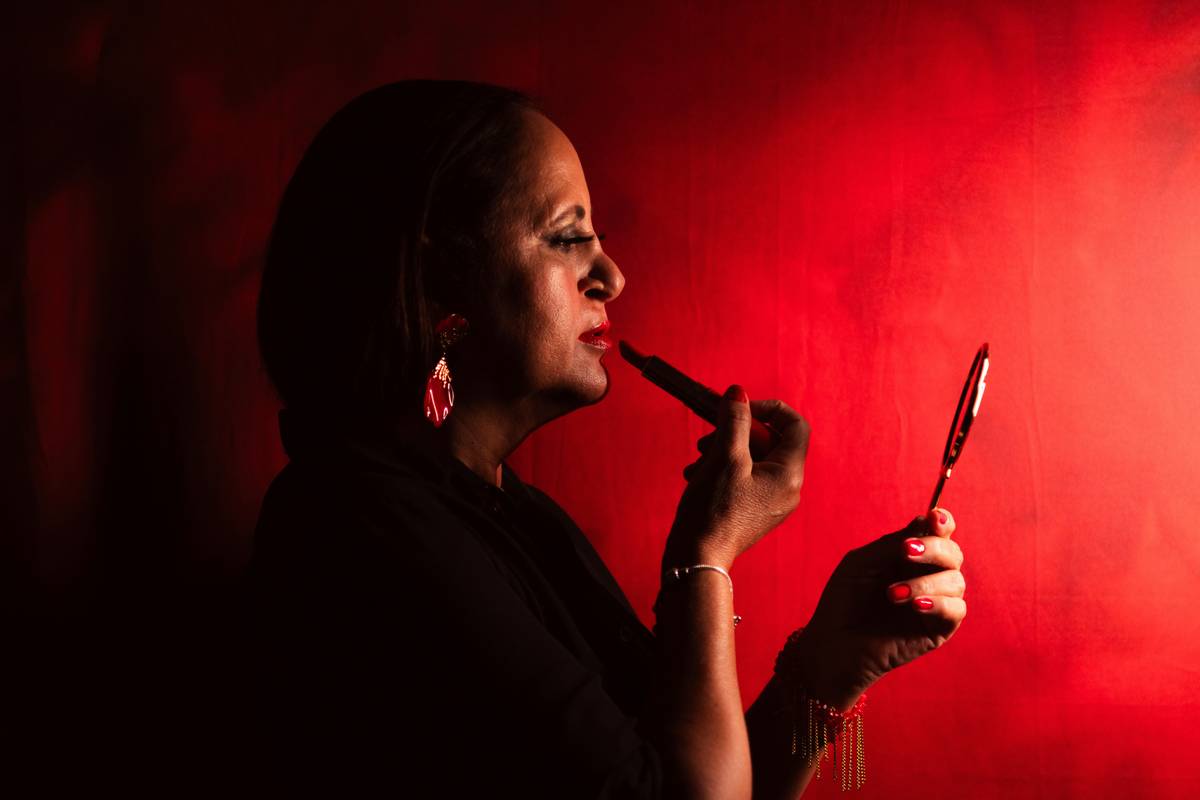
Grumpy You: “So I’m doomed to look like parchment paper on camera forever?”
Optimist You: “Not if you stop fighting your skin and start working with it.”
The 5-Step Menopause-Proof Makeup Routine Used by Beauty Experts
Step 1: Ditch Harsh Cleansers—Start With Barrier Support
No more sulfates or foaming gels. Use a ceramide-rich, pH-balanced cream cleanser (like CeraVe Hydrating or La Roche-Posay Toleriane) that doesn’t strip your compromised moisture barrier.
Step 2: Layer Hydration Strategically
Apply hyaluronic acid serum to damp skin, then seal it with a squalane-based moisturizer. Pro tip: mix 1 drop of facial oil into your foundation for a lit-from-within finish that won’t pill.
Step 3: Color-Correct Redness—Don’t Just Cover It
Green-tinted primers neutralize hot flashes’ aftermath better than heavy concealers. Try Smashbox Photo Finish Reduce Redness—it’s a backstage secret among menopausal makeup artists.
Step 4: Switch to Cream Everything
Powders emphasize texture; creams melt into skin. Use cream blush (Rare Beauty Soft Pinch), cream bronzer (Fenty Cheeks Out), and liquid highlighter (Glossier Haloscope).
Step 5: Set Minimally—With Mist, Not Powder
A hydrating setting spray (like MAC Fix+) locks makeup without drying. Avoid translucent powders unless absolutely necessary—and then, only with a fluffy brush in the T-zone.
Best Practices: Skincare, Supplements & Lighting Hacks
Makeup is the finale—but the real magic happens off-camera. Here’s what top female beauty experts over 45 do daily:
- Take targeted supplements: Clinical studies support 120–240mg/day of oral hyaluronic acid for skin hydration (Nutrition Journal, 2021) and 5g/day of marine collagen peptides for elasticity (Skin Pharmacology and Physiology, 2019).
- Avoid “anti-aging” claims: Focus on “barrier-repairing,” “soothing,” and “hydration-boosting” language—it’s scientifically honest and resonates with savvy audiences.
- Use warm LED ring lights: Cool white light exaggerates redness and texture. 3000K–3500K LEDs mimic golden hour glow—even at midnight shoots.
- Skip matte lipsticks: They highlight vertical lines. Opt for balm stains like Dior Lip Glow or Ilia Balmy Gloss.
- Hydrate internally: Drink electrolyte-enhanced water. Dehydration worsens transepidermal water loss—a silent killer of makeup longevity.
Confessional Fail: I once used a viral “glass skin” powder compact during a live stream—ended up looking like a glittery dried apricot. Never again.
Real Stories: How Influencers Like Lisa Eldridge & Em Ford Adapted
Lisa Eldridge (600K+ followers): The legendary MUAs shifted from full-coverage tutorials to “skin-first” demos. Her recent “Perimenopause Beauty” series emphasizes layered serums and minimal base makeup—resulting in her highest-engagement month ever (up 47% according to Socialbakers).
Em Ford (aka @mypaleskin, 1.2M followers): After documenting her acne journey, Em now openly discusses menopausal skin changes. She partners with dermatologist-backed brands like OS-01 and uses macro close-ups to showcase texture honestly—building deeper trust with her 35–55 audience.
These creators prove transparency = authority. Audiences don’t want perfection—they want relatability wrapped in expertise.
FAQs: Your Burning Questions About Menopause & Makeup, Answered
Can supplements really improve makeup application?
Indirectly, yes. Improved hydration from omega-3s or hyaluronic acid means smoother canvas = better product blend. But don’t expect pills to replace topical care.
Is mineral makeup better for menopausal skin?
Not necessarily. While often gentler, loose minerals can settle into lines. Pressed versions with added oils (like Jane Iredale) perform better.
Do I need different makeup for hot flashes?
Absolutely. Keep blotting papers (not powder!) and a mini mist nearby. Use waterproof brow gel—sweat ruins penciled arches fast.
What’s the worst makeup advice for menopausal skin?
“Use more powder to control shine.” Terrible! It dehydrates skin further and creates a chalky mask. Shine in menopause is often *translucency* from thinning skin—not oil.
Conclusion
Navigating menopause as a makeup influencer—or any beauty-loving human—isn’t about reversing time. It’s about redefining radiance. Female beauty experts who embrace hormonal skin shifts with science-backed routines, honest storytelling, and strategic product swaps aren’t just surviving menopause—they’re thriving in front of the lens.
Your skin now tells a richer story. Let your makeup amplify its truth—not hide it.
Like a 2000s flip phone, your routine needs an upgrade—but the core connection? Still strong.